


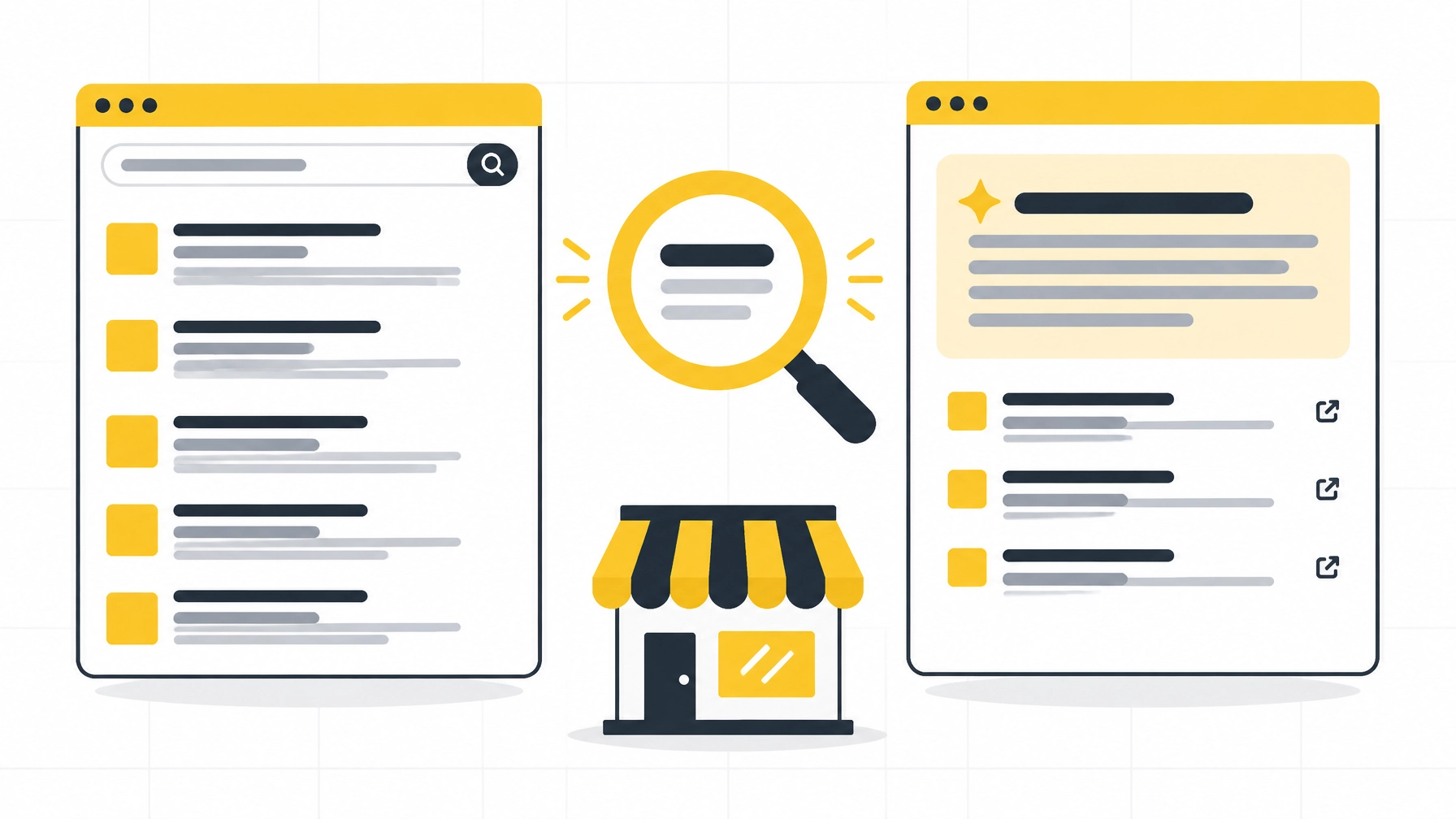
If you’ve searched Google lately, you may have noticed a new feature near the top of some results: an AI-generated summary called an AI Overview. It gathers information to offer a quick response, with links to websites where you can explore further.
For a small business owner, that can raise a fair question: If Google answers people right on the results page, will customers still find my website?
The short answer: traditional Google searches aren’t dead. But the way people discover and compare businesses is changing. With a few practical steps, you can make it easier for both customers and search engines to understand what you offer.
What are Google AI Overviews?
AI Overviews are summaries Google may show for certain searches, often when a question needs a little more explanation than a list of links can provide. Someone researching a service might see a brief overview along with links to websites that support or expand on the answer.
These summaries don’t appear for every search. Google says they show when its systems decide an AI-generated overview may be useful. A customer searching for “what should I ask before hiring a contractor?” may see one. Someone searching for “lawn care near me” may still see local businesses, map results, and other familiar search features.
Google may also explore related searches to gather information for an overview. That means a useful page might be discovered in connection with a specific question, even if the wording on the page isn’t an exact match for the customer’s search.
That’s a new route to discovery, not a replacement for every traditional result.
What does AI search mean for a New Jersey small business?
Customers still need local services. They still compare options, check service areas, read reviews, and look for a business they feel comfortable contacting. What may change is where they encounter your business and what they see before deciding to visit your site.
For a New Jersey law firm, that could mean answering common questions about an initial consultation. For a lawn care company, it might mean clearly explaining which towns it serves and what a seasonal cleanup includes. For any local business, clear and trustworthy information gives people a better chance of understanding whether you’re the right fit.
An AI Overview might provide a quick answer and link to a relevant page. A traditional result might lead directly to your homepage or service page. A local search might surface your Google Business Profile or a map listing. Your goal isn’t to choose one format over another. It’s to make your business easy to understand wherever customers find it.
Google’s guidance is reassuring: there isn’t a special AI-only optimization technique or markup that guarantees your website will appear in AI Overviews. Pages need to meet the usual requirements to appear in Search, and visibility is never guaranteed. The basics still matter: accessible pages, useful information, good site structure, and accurate business details.
Five practical steps to strengthen your visibility
1. Make your services and service area easy to find
A visitor shouldn’t have to guess what you do or whether you serve their town. Give each important service a clear description, and explain where you work in natural language.
For example, a page for a New Jersey electrician might describe the specific services available, the communities served, and how customers can request an estimate. A law firm could explain its areas of practice, office location, and what a prospective client can expect when getting in touch.
Keep location information honest and specific. Don’t create pages for towns you don’t actually serve or copy the same generic paragraph across dozens of locations. Helpful details are more useful than a long list of place names.
2. Answer real customer questions directly
Think about what someone wants to know before they call, book, or request a quote. Then answer those questions in plain language on the relevant page.
A home services business might explain how estimates work, what affects pricing, or whether customers need to be home during an appointment. A professional service provider might describe the first meeting, typical next steps, and what information a new client should bring.
Use headings that make each answer easy to scan. Put the answer near the top of its section, then add the details that help a customer make an informed choice. You don’t need to write for a machine. Write a clear, complete answer for the person who needs it.
3. Keep your Google Business Profile accurate
Your website is important, and so is the business information customers see in Google Search and Maps. Check that your profile has the correct business name, phone number, hours, categories, services, and service area. Add current photos and update special hours when they change.
Make sure these details agree with your website. If a customer sees different hours or contact information in different places, it can create doubt, or lead to a missed call.
Google specifically encourages businesses to keep their Business Profile information current. It’s a useful step for local discovery, whether a person sees a traditional listing or an AI-powered result.
4. Give your website a clear structure
A well-organized website helps people find what they need and helps search engines understand how your pages fit together. Your main navigation should make important pages easy to reach. Your service pages should link to relevant information, and your contact page should be simple to find.
Some websites can also use structured data: a behind-the-scenes way to label information such as a business’s name, address, phone number, and opening hours. This can help search engines interpret details about your business, but it isn’t a shortcut to better rankings or guaranteed AI visibility. The information in the markup should match what customers can actually see on the page.
If you’re unsure whether your site needs it, start with the visible essentials first: accurate details, useful pages, and clear navigation.
5. Measure leads, not just rankings
It’s natural to watch where your site ranks, but rankings alone don’t tell you whether your online presence is helping your business grow. Pay attention to calls, form submissions, bookings, quote requests, and the pages that lead to those actions.
Google includes traffic from AI features in the overall “Web” reporting in Search Console, rather than providing a separate, simple AI Overview traffic total. That means you may not be able to tell from one report exactly which search feature led someone to your site. Pair your search data with website analytics and records of real customer inquiries to get a fuller picture.
Where SEO fits in
Strong visibility in AI-powered search is built on a useful, well-maintained online presence, not a secret formula. A good local SEO foundation helps your pages get discovered, gives customers clear answers, and makes it easier for people to take the next step.
That can involve reviewing your website’s content and structure, improving service and location pages, checking technical issues, and making sure your local business details are consistent. It’s a process, and the right priorities depend on your business, your website, and the customers you want to reach.
At Design On My Mind, we help businesses strengthen their search visibility with practical SEO support, including keyword research, on-page improvements, technical checks, and local SEO setup. We’ll walk you through what matters and help make the next steps manageable, no advanced technical knowledge required.
The takeaway: make it easy to understand and trust your business
Google search is changing, but your next step doesn’t have to be complicated. Make your services clear. Answer customer questions. Keep your local information accurate. Build a website that works well for people on phones and computers.
These are useful improvements whether someone discovers you through a traditional result, a map listing, or an AI Overview.
Want a clearer picture of how your business shows up in search? Explore our SEO services, or request a quote and we’ll help you figure out a practical place to start.